
Commercial Battery Storage In Bolton

Is your Bolton site paying peak rates for power it could have stored at lunchtime?

Commercial battery storage for Bolton manufacturers and warehouse operators, paired with solar or running on its own

Battery storage earns its keep in Bolton in two ways. The first is time-shifting: holding solar output generated around midday and releasing it during the weekday 4pm to 7pm red band, when SP Electricity North West's distribution charges peak. The second is less obvious and often matters more to a manufacturer. Motors, compressors and ovens starting together can push a site briefly over its agreed import capacity, and an excess on a half-hourly supply is charged for the whole billing period, not just the half-hour in which it happened. A battery that clips those spikes protects you from that charge. Bolton's factory base, much of it in older buildings with constrained incoming supplies, makes the second use unusually relevant here. We look at your metering data first and tell you which of the two applies, if either does.

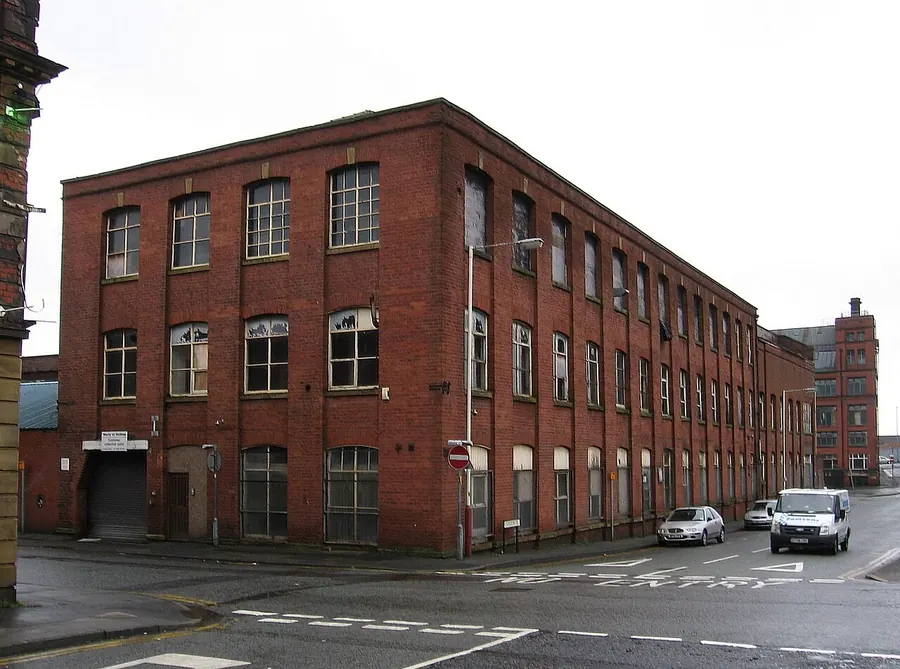
Three-storey brick factory building at Carlton Street and Shiffnall Street, Bolton
Photo: Dave Bevis, Wikimedia Commons, CC BY-SA 2.0

Battery Storage Survey In Bolton

We reply within one working day to book a site visit.

No charge for the survey or the proposal. Your details are only used to reply to you - see the privacy policy.

Commercial Battery Storage · Bolton

What a battery does on a Bolton site

The value depends on how your demand moves through the day. These are the effects we look for in the data.

01

Fewer red-band units

On SP Electricity North West's 2026/27 charges, red-band distribution rates for smaller aggregated sites sit roughly six to ten times higher than amber. A battery discharging between 4pm and 7pm on weekdays moves that slice of consumption out of the most expensive window, which helps most where a Bolton factory runs a late shift into the evening.

02

Capacity breaches avoided

Exceed your maximum import capacity on a half-hourly supply and the excess kVA is billed at the excess rate for the entire billing period. Batteries respond quickly enough to shave the peak when several machines start at once, which is often cheaper than paying for a permanent capacity increase.

03

More of the roof's output kept

Without storage, an array on a five-day factory exports most of its weekend generation for whatever your supplier pays. Suppliers that mainly serve business customers are not obliged to offer the Smart Export Guarantee at all. Storing Saturday's output for Monday morning is frequently worth more than selling it.

04

Headroom on a tight supply

Some older mill buildings have incoming supplies sized for a long-gone spinning operation, since divided between tenants. Where the supply is too small for new equipment, a battery can cover short peaks and defer a capacity upgrade, though it will not replace one if your baseload keeps climbing.

05

Rates relief carries across

Storage used with on-site renewable generation sits inside the same business rates exemption as the panels, which runs to 31 March 2035. A battery bought purely to trade against the grid is less clearly covered, so we keep both the design and the paperwork tied to your solar.

06

Something concrete for the insurer

We design to the IET Code of Practice for Electrical Energy Storage Systems, now in its 2024 third edition, and to the battery chapter added to BS 7671 by Amendment 4. A documented location, ventilation and isolation scheme gives your broker something specific to assess instead of an open question about lithium.

£0

Site survey and a review of your half-hourly data

kWh

Systems sized from your own meter readings

G99

Grid application drawn up and submitted for you

M17

Based on Trafford Wharf Road, Trafford Park

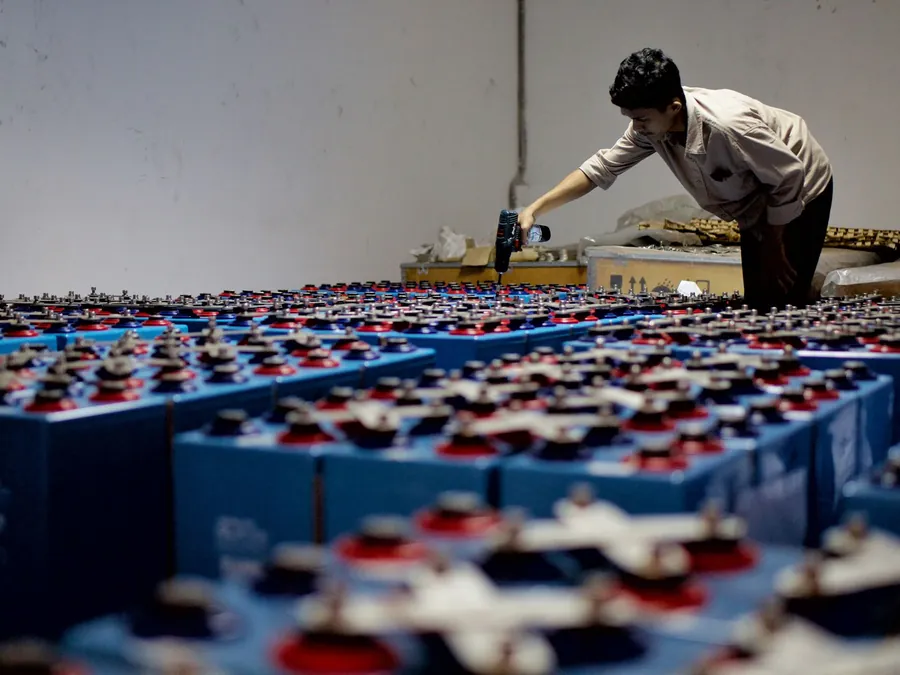
Technician checking rows of lithium battery modules on a storage rack inside a plant room
Bolton

Batteries in old mills and new sheds

Placement is the first practical question on a Bolton job. Inside a mill, thick masonry and plenty of floor space can look attractive for a battery room, but timber floors, limited ventilation and escape stairs shared with other tenants usually rule out the upper storeys. A ground-floor plant room with direct external access is the normal answer, or an outdoor enclosure in the yard. Listed status adds a further check, because an external cabinet beside a Grade II* building like Swan Lane may need consent of its own.

On the newer estates the space problem disappears and the grid question takes over. A large shed at Logistics North or Lostock may have plenty of yard for a containerised unit, but batteries count as generation for G99 purposes, so the connection application has to include them. No permitted development class covers battery storage either, which means an external unit generally needs planning advice from Bolton Council before we commit to a position.

If you are still deciding whether the roof itself is worth covering, our page on commercial solar panels in Bolton covers mills, sheds and what each costs to get right.

"Most of the Bolton manufacturers we're asked to look at come to us about red-band costs, and the capacity spikes in their half-hourly data often turn out to be the more interesting finding."
Based on battery storage enquiries handled by Commercial Solar Manchester around Bolton
The install

Installing battery storage in Bolton: the seven stages

  1. 1

    Profile the demand

    We go through a year of half-hourly data looking for red-band consumption, weekend export and any half-hours that brush against your agreed capacity. On a site with several tenants we also need to know which meter the battery would sit behind.

  2. 2

    Size and specify

    Capacity in kWh and power in kW are chosen separately; a site with short starting spikes needs power more than storage. The proposal shows the expected charge and discharge pattern on an ordinary weekday and at the weekend, with the savings method set out in full.

  3. 3

    Location, fire safety and the grid

    We agree the position with you and your insurer, check ventilation, separation and firefighter access, and submit the G99 application with the battery included. Systems of 1 MWh or more also bring planning guidance that encourages early contact with the fire and rescue service.

  4. 4

    Prepare the room or the yard

    Outdoor units need a level base, bollards against yard traffic and a cable route back to the main switchboard. Indoors we make good the fire-stopping and have an engineer confirm the floor loading, which is not a formality on an Edwardian mill floor.

  5. 5

    Install the battery and conversion equipment

    Racks or cabinets go in, then the inverter or power conversion system, protective devices rated for two-way current, and the metering that lets the controls see your import in real time. Work on live switchgear is planned for a shutdown window you choose.

  6. 6

    Commission and tune

    We test the protection, prove the isolation and run the battery through charge and discharge cycles under real load. Red-band and capacity settings come from the data, then get checked again once a few weeks of actual operation have been logged.

  7. 7

    Handover and monitoring

    You receive the commissioning records, emergency shutdown instructions for your site team and the fire service, and monitoring that shows what the battery has saved against the baseline we agreed. We revisit the settings if your shift pattern changes.

Guarantees and warranties

Who answers for your Bolton installation, and for how long

There are two layers of cover on a commercial installation, and it pays to know which is which. The first is the installer's workmanship guarantee. It covers the way the system was put in: the fixings through your roof, the cable runs, the terminations, the protective devices and the commissioning settings. Its length and terms are written into the quotation, so you can read them before you sign rather than discover them afterwards.

The second layer belongs to the manufacturers. Panels normally carry a product warranty and a separate performance warranty, which promises a minimum output after a set number of years. Inverters and batteries have their own terms, often with cycle or throughput limits on storage. These vary by product, so every proposal names the exact models and attaches their warranty documents.

A guarantee is only as good as the install underneath it. That's why the structural check comes before the design is fixed, why every string is tested and recorded to BS 7671, and why the grid connection is commissioned to the settings SP Electricity North West has approved. If something we fitted fails because of how it was fitted, we come back and put it right.

In writing

Workmanship guarantee, set out in your quote

Per model

Manufacturer product and performance warranties

Test results, drawings, warranty certificates and the grid connection agreement are handed over in one pack on the last day.

Battery, no battery or a bigger supply: the Bolton comparison

The table below sets storage against the alternatives a Bolton site usually weighs up, including simply exporting more solar or asking the network for extra capacity. Which column wins depends on the shape of your peaks.

Comparison point Solar onlySolar + batteryBattery on its own (tariff shifting)
Solar used on site Only what the load takes at the timeHigher: surplus stored for laterNo solar involved
Red-band (16:00-19:00) costs Little effect, almost none in winterCut with stored solar or overnight chargeCut with overnight green-band charge
kVA capacity charges No reliable effectPeaks can be shavedPeaks can be shaved
DNO export limit Surplus above the cap is lostSurplus stored instead of clippedCap applies to battery discharge too
Backup in a power cut None as standardOnly if designed for itOnly if designed for it
Planning and permissions G99; roof usually permitted developmentG99; roof PD plus a siting and fire reviewG99; no PD class, so take planning advice

What drives a battery price in Bolton

We do not publish a per-kWh figure, because there is no reliable public benchmark for commercial storage. These are the factors that move a quote.

Power versus energy

A battery built to clip a short capacity spike needs a high power rating but modest storage; one built to cover three hours of red band needs the opposite. Getting that balance wrong is the commonest way to overpay.

Mill or shed

Siting a battery in a Daubhill or Halliwell mill can mean structural checks, fire-stopping through old floors and long cable runs between storeys. A yard-mounted unit beside a portal-frame shed at Lostock is usually simpler, provided there is a spot safe from reversing HGVs.

Switchgear condition

Older switchboards may lack the space or the protective devices to accept a two-way supply. Upgrading them is sometimes the largest single line in a Bolton battery quote.

Grid and planning work

The G99 study, any export limitation equipment and, for outdoor units, planning advice all add cost and time. We list them as separate items so you can see what the battery itself costs.

Read the full solar and battery cost guide

Battery storage in Bolton: common questions

Is an old mill building a sensible place for a battery?

Sometimes, on the ground floor. Upper floors in former spinning mills tend to have timber structures, shared stairs and limited ventilation, which are poor conditions for lithium storage. A ground-floor room with an external door, or an enclosure in the yard, usually satisfies insurers more easily. Listed mills may need consent for either option.

Does a Bolton factory without solar still benefit from a battery?

It can. A battery can charge overnight in the green band and discharge in the red, and it can shave capacity peaks whether or not there are panels on the roof. The business rates exemption only applies where storage is used with renewable generation, though, so the sums change, and we would show you both versions.

How long does it take to get a battery connected?

The G99 process sets the pace. SP Electricity North West has 45 working days to issue a quotation for low-voltage generation works and 65 for high-voltage. The physical installation is the shorter part of the programme; the paperwork and any reinforcement are what stretch it.

Will our insurer accept a lithium battery on site?

Tell them early. Insurers vary, and some will ask about location, separation from stock, fire detection and how the system is isolated. We provide the design details they need, based on the IET Code of Practice. PAS 63100, which sometimes comes up, is written for homes and does not apply to commercial premises.

Can we sell stored power back to the grid?

Yes, through an export tariff, but read the terms. SEG licensees do not have to pay for battery export that was charged from the grid, and may ask for evidence that what you export came from the panels. For most manufacturers paying business import prices, using the stored power on site is worth more than exporting it.

Away from the plant room

What to do in Bolton

Bolton on the map

Reviews

What Bolton businesses say about us

We're a new name, so you won't find a wall of reviews here yet. We'd rather show you nothing than make some up.

For a project this size, reviews were never the best evidence anyway. Ask any installer you're considering for a reference site you can visit, a year or more of generation data from a system they fitted, and the grid connection paperwork from a past job. If they can't produce those, keep looking.

Find out whether a battery pays on your Bolton site

Send twelve months of half-hourly data and a note of your shift pattern. If storage is not worth it, we will say so.