
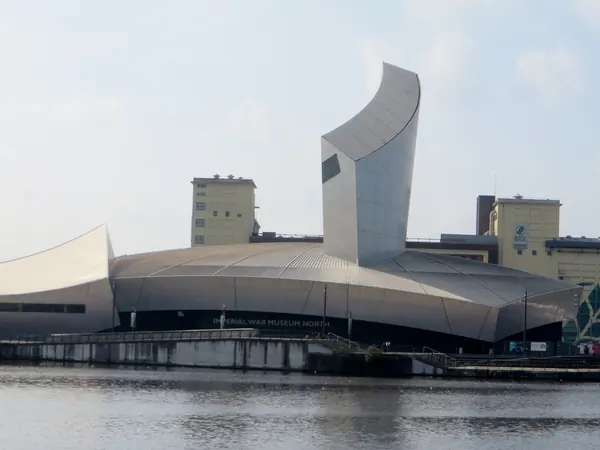
IWM North
Daniel Libeskind's shard-shaped Imperial War Museum North sits on Trafford Wharf Road beside the Ship Canal, with free entry to its displays on how conflict has shaped people's lives since 1914.
Learn more about IWM North on Google MapsWe fit commercial solar panels in Trafford Park from a yard on Trafford Wharf Road, so for most units on the estate we are a few minutes away rather than a morning's drive. That matters less for the install than for everything around it: walking the roof with your facilities manager, looking at the half-hourly data, and sitting down with whoever actually owns the building. On the Park that last part is often the deciding factor. A great many occupiers lease their units, and a solar array is a 25-year asset bolted to someone else's roof. So before we talk panel counts we ask three plain questions. Who owns the roof? How long is left on your lease? And does the payback land before the break clause does? Get those right and the engineering is the straightforward bit.
We reply within one working day to book a site visit.
Trafford Park was sold at auction in 1896 and turned into the world's first planned industrial estate, two years after the Ship Canal opened and made the land worth building on. Westinghouse began building turbines and generators here in 1902, and Ford opened its first factory outside America on the Park in 1911 to make the Model T. Kellogg's ran its first UK factory here from 1938 until production ended after the 2024 closure. That long history shows up on the roofs. Walk from Westinghouse Road to Europa Way and you pass early brick warehouses, mid-century steel sheds and big clad logistics boxes, often on the same street.
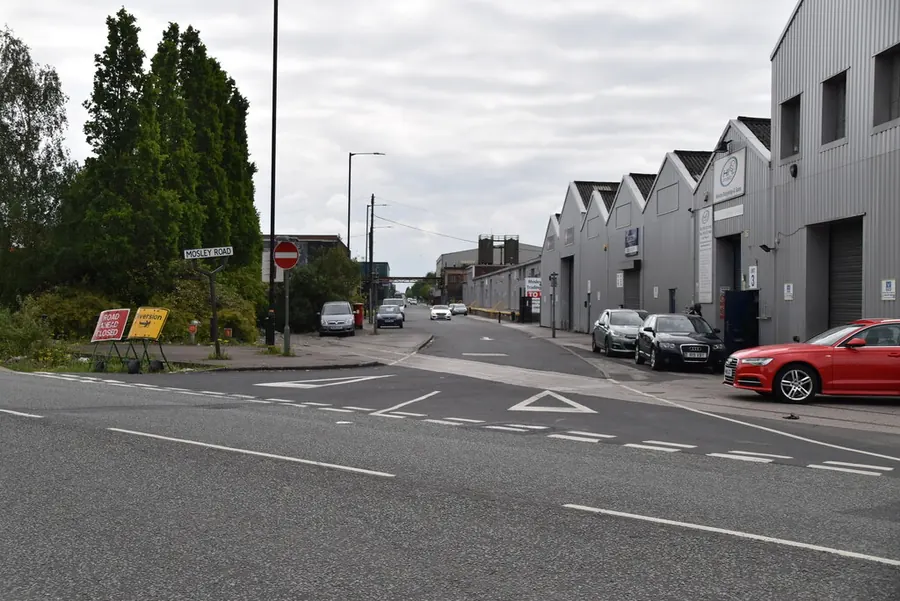
Each of those generations asks a different question of a solar installer. The 1920s brick blocks near Trafford Road have small, broken-up roofs and a lot of history under the felt. Mid-century sheds along Mosley Road and Nash Road may carry fibre-cement sheeting, which HSE treats as fragile until proven otherwise. The newer portal-frame units off Barton Dock Road and Ashburton Road West tend to have big, clean, low-pitch roofs that suit a large array. Recent schemes are already doing it: Trafford150, the Grade A warehouse completed in November 2024 on the old printworks site, carries roughly 17,000 sq ft of rooftop PV producing about 300,000 kWh a year.
£0
Site survey and a review of your half-hourly data
kWh
Systems sized from your own meter readings
G99
Grid application drawn up and submitted for you
M17
Based on Trafford Wharf Road, Trafford Park
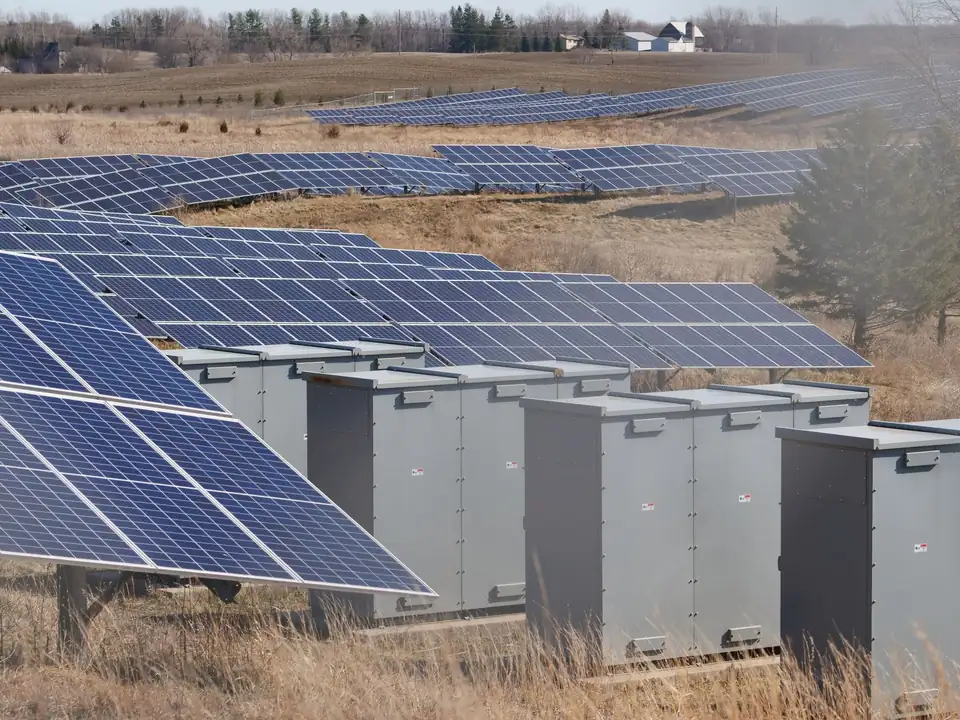
Store midday solar for the weekday 4pm to 7pm red band, keep peaks under your agreed capacity, and stop giving cheap units away at weekends when the warehouse is quiet.
Learn more about battery storage in Trafford Park →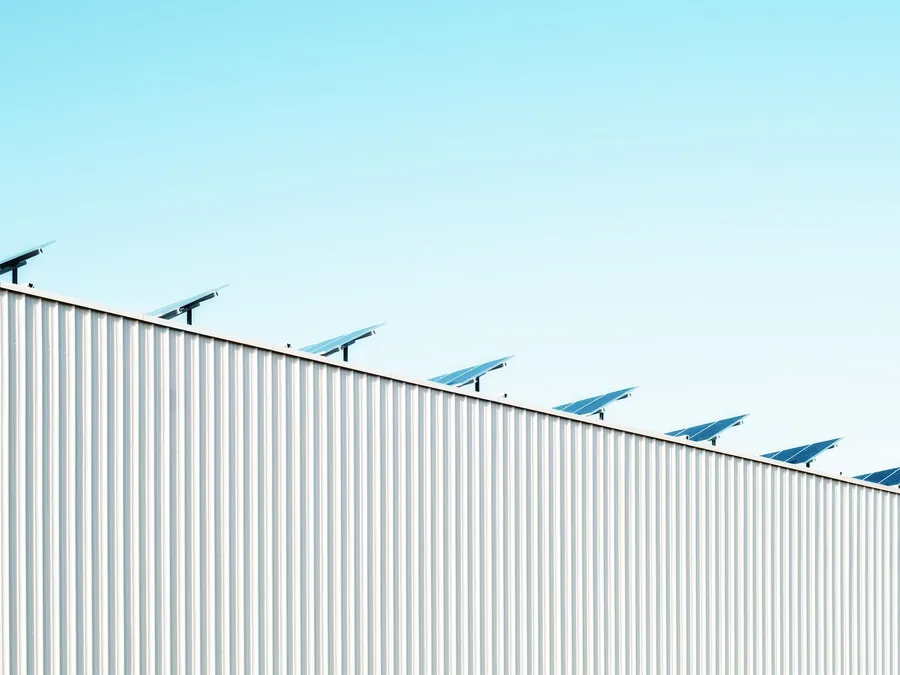
Rooftop PV designed around your load profile and your lease, on anything from a 1920s brick warehouse to a modern clad distribution shed.
Learn more about commercial solar panels in Trafford Park →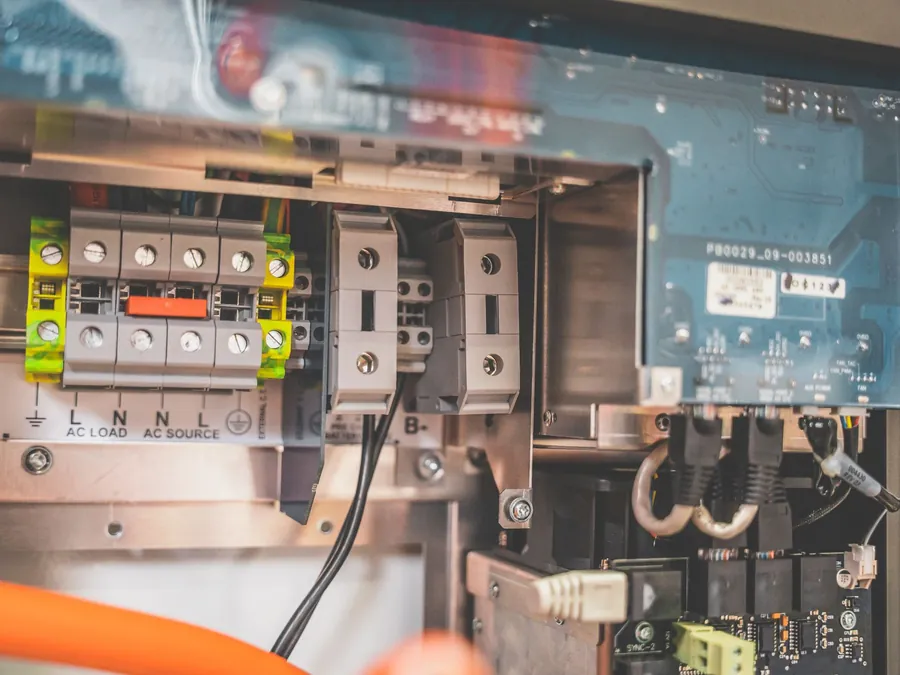
Inspections, inverter fault-finding and cleaning for arrays already on the Park, including systems you inherited when you took the lease.
Learn more about solar panel maintenance in Trafford Park →The case here rests on two things: daytime demand that lines up with daylight, and a lease structure that lets you see the return before you move on.
Most Park businesses do their heaviest work between the morning and late afternoon: forklifts charging, conveyors moving, compressors and lighting running across long aisles. That shape suits rooftop PV, because almost every unit the array produces can be used on site. Self-consumed kWh are worth what you would otherwise pay to import, not the lower rate an export tariff offers.
No conservation area covers Trafford Park, and there are very few homes close enough for glare to become a talking point. For most of the big sheds the planning route is permitted development, with a prior approval step from Trafford Council if the array is over 50 kW. That is a far shorter path than a full application.
For a tenant, solar can be negotiated as part of a lease renewal: the landlord consents, you fund the system, and the lease records who owns it and what happens at the end. For a landlord, a roof with panels already on it is an easier sell to the next occupier trying to cut their energy costs.
In England, plant used for onsite renewable generation, and storage used with it, is exempt from business rates between April 2022 and March 2035. On a large Park unit that removes a cost that used to sit quietly in the background of the payback sum.
Business electricity prices peaked in 2023 and have eased only slightly since. DESNZ figures for 2025 put small and medium users at roughly 26p to 29p per kWh including the Climate Change Levy. Every kWh made on your own roof is a kWh at a price you fixed the day the system was commissioned.
Being based on Trafford Wharf Road means we can get to a tripped inverter or a storm-damaged panel on the Park quickly, and a survey visit can be fitted around your shift change rather than the other way round. Routine checks cost less when nobody has to cross the city to do them.
"Most of the Trafford Park enquiries we're asked to look at come from tenants rather than freeholders, and the first meeting is nearly always about the lease, not the panels."
There are two layers of cover on a commercial installation, and it pays to know which is which. The first is the installer's workmanship guarantee. It covers the way the system was put in: the fixings through your roof, the cable runs, the terminations, the protective devices and the commissioning settings. Its length and terms are written into the quotation, so you can read them before you sign rather than discover them afterwards.
The second layer belongs to the manufacturers. Panels normally carry a product warranty and a separate performance warranty, which promises a minimum output after a set number of years. Inverters and batteries have their own terms, often with cycle or throughput limits on storage. These vary by product, so every proposal names the exact models and attaches their warranty documents.
A guarantee is only as good as the install underneath it. That's why the structural check comes before the design is fixed, why every string is tested and recorded to BS 7671, and why the grid connection is commissioned to the settings SP Electricity North West has approved. If something we fitted fails because of how it was fitted, we come back and put it right.
In writing
Workmanship guarantee, set out in your quote
Per model
Manufacturer product and performance warranties
Test results, drawings, warranty certificates and the grid connection agreement are handed over in one pack on the last day.
We start with twelve months of half-hourly data from your supplier and a copy of the relevant lease clauses. Between them they tell us how much solar you can actually use and whether there is enough lease left to justify the spend.
Our design shows the array layout, expected yield, payback and the paperwork your landlord or their agent will want: method statements, roof loading notes and a plan for removal or handover at lease end.
A structural engineer checks the frame, and we confirm whether the sheets are fibre-cement, metal or something else. In parallel we prepare the G99 application to SP Electricity North West, the network operator for the whole Park.
Scaffold or edge protection goes up where it will not block loading bays, and we agree working times so lorry movements and our deliveries never share a yard at the same moment. Fragile areas are boarded or netted before anyone steps onto the roof.
Mounting systems are chosen to suit the sheet profile. Panels go on, strings run back to inverters sited where your maintenance team can reach them, and the AC connection is made into your main distribution board.
Every string is tested, protection settings are checked against the G99 connection agreement, and we witness the system running against live site load before signing it off.
You get the as-built drawings, test results and warranty papers, a monitoring login, and a short summary written for the lease file so the next surveyor or landlord's agent knows exactly what is on the roof.
Daniel Libeskind's shard-shaped Imperial War Museum North sits on Trafford Wharf Road beside the Ship Canal, with free entry to its displays on how conflict has shaped people's lives since 1914.
Learn more about IWM North on Google Maps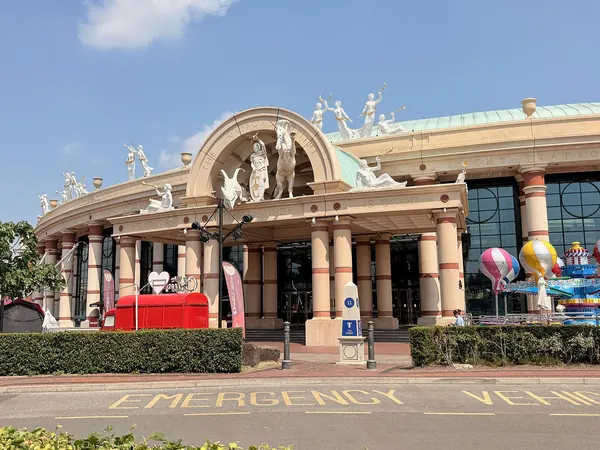
The ornate Trafford Centre shopping and leisure complex, opened in 1998, sits at the western end of Trafford Park off the M60, with shops, restaurants, a cinema and the Trafford Palazzo next door.
Learn more about Trafford Centre on Google Maps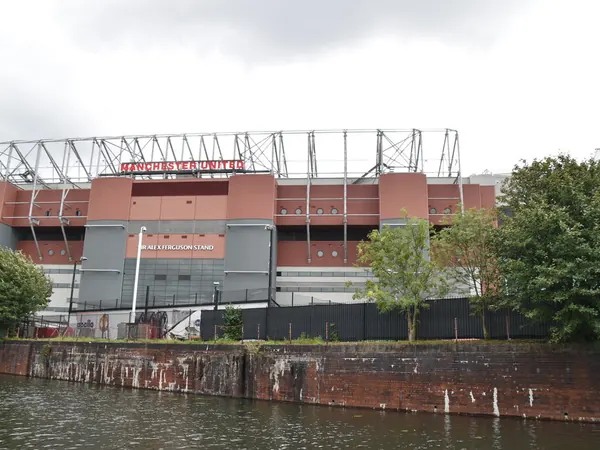
Manchester United's home ground stands on the edge of Trafford Park beside the Bridgewater Canal, and runs a club museum and behind-the-scenes stadium tours on non-match days.
Learn more about Old Trafford Stadium & Museum on Google MapsWe're a new name, so you won't find a wall of reviews here yet. We'd rather show you nothing than make some up.
For a project this size, reviews were never the best evidence anyway. Ask any installer you're considering for a reference site you can visit, a year or more of generation data from a system they fitted, and the grid connection paperwork from a past job. If they can't produce those, keep looking.
On the Park, the roof usually sets the price more than the panel count does. A modern clad shed with clean sheeting, safe access and a large supply is the cheapest per kW to fit. An older brick warehouse with a patched roof, or a mid-century shed with fibre-cement sheets, can need repairs or over-cladding before any rail goes on. DESNZ data for 10 to 50 kW systems in 2025/26 puts the North West mean at about £1,248 per kW, and per-kW prices tend to fall as systems grow. Lease length also matters: a shorter term may favour a smaller array sized for a faster payback.
Usually not a full application. Trafford Council is the planning authority, and rooftop solar on non-domestic buildings falls under permitted development (GPDO Part 14, Class J). Systems up to 50 kW need no prior approval; larger arrays need prior approval from Trafford Council on design, appearance and glare, which the council has 56 days to decide. The old 1 MW cap was removed in December 2023. Panels must stay at least 1 m from the roof edge, and listed buildings are excluded. No conservation area covers the Park itself.
Often yes, but only with the landlord's written consent. The usual sticking points are who owns the panels, who insures them, who is responsible for the roof underneath, and whether you must remove the system at the end of the lease. We put those questions in front of you early, and we compare the expected payback with the time left on your lease or to your next break date.
HSE treats fibre-cement roofs as fragile, and older sheets may contain asbestos. We have the material identified first. Depending on its condition, the answer may be over-cladding, replacing the roof, or fitting panels with a mounting method that avoids disturbing the sheets. If the roof needs replacing in the next few years anyway, we will tell you to do that before any solar goes on.
Anything above 16 A per phase needs a G99 application to SP Electricity North West. For generation schemes, the national guaranteed standard for issuing a low-voltage quotation is 45 working days, and longer where high-voltage work is involved. We apply as soon as the design is settled so that the roof work and the network paperwork run in parallel.
We are on Trafford Wharf Road, so a site visit on the Park rarely needs more than a day's notice. Send us your half-hourly data and the lease, and we will tell you plainly whether the numbers stack up.