
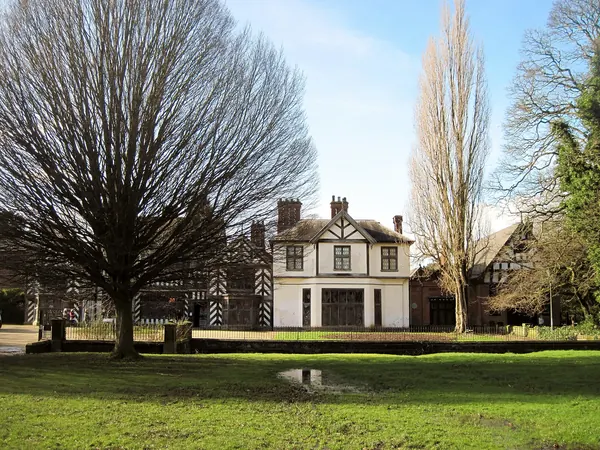
Wythenshawe Hall
A timber-framed Tudor hall built around 1540, badly damaged by arson in 2016 and reopened to visitors in 2022 after a long repair programme.
Learn more about Wythenshawe Hall on Google MapsCommercial solar panels on a Wythenshawe shed tend to be judged on two things that barely come up elsewhere in the city. The first is the load. Cargo handlers, distribution operators and units with chillers or servers around Roundthorn, Sharston and Airport City often never switch off, so a roof array has a standing demand to feed seven days a week and almost nothing is wasted as cheap export. The second is the neighbour. With Manchester Airport's runways a short distance south, panel angle and orientation get looked at for glare before the layout is fixed, and we check whether the airport's safeguarding team needs to be consulted. Neither point stops a project. Both belong at the start of the design rather than halfway through the planning stage, and that is where we put them.
We reply within one working day to book a site visit.
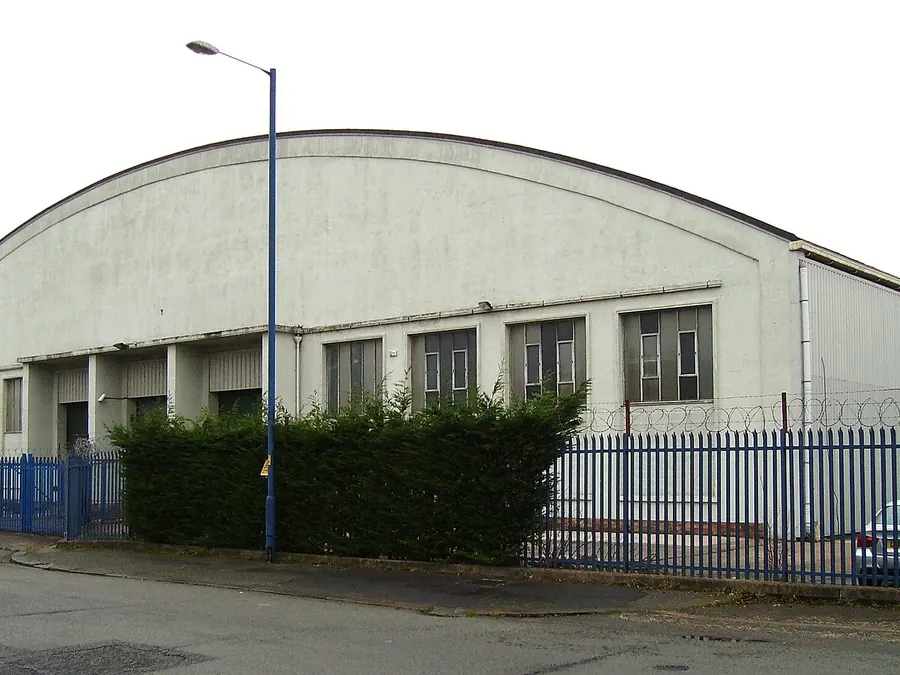
Wythenshawe was planned as a garden city. Manchester brought in Barry Parker, who had worked on Letchworth, and building started in 1927 with the aim of creating the largest garden city anywhere. Industry came later, after the Second World War: Sharston Industrial Estate grew first, followed by Moss Nook and Roundthorn. The Sharston industrial area still includes the old Wythenshawe bus garage on Bradnor Road, whose long curved roof is a reminder that big-span buildings have been part of this district for decades. Garden-city housing sits close to many of these estates, which matters for canopy siting and glare.
The other half of the story is the airport. The Airport City Enterprise Zone, declared in 2011, linked 116 hectares around Manchester Airport, the Medipark at Wythenshawe Hospital, the town centre and Roundthorn Industrial Estate. The M56 runs straight through, with junction 3 at Sharston and junction 5 for the terminals, the M60 meets it at junction 5 to the north, and the Metrolink Airport line has run through Wythenshawe since 2014. Rooftop solar is already proven here: DHL's express logistics centre at the airport carries a 259.7 kWp array of 490 panels, expected to produce about 234,742 kWh a year. The only conservation area nearby is Northenden's village core.
£0
Site survey and a review of your half-hourly data
kWh
Systems sized from your own meter readings
G99
Grid application drawn up and submitted for you
M17
Based on Trafford Wharf Road, Trafford Park
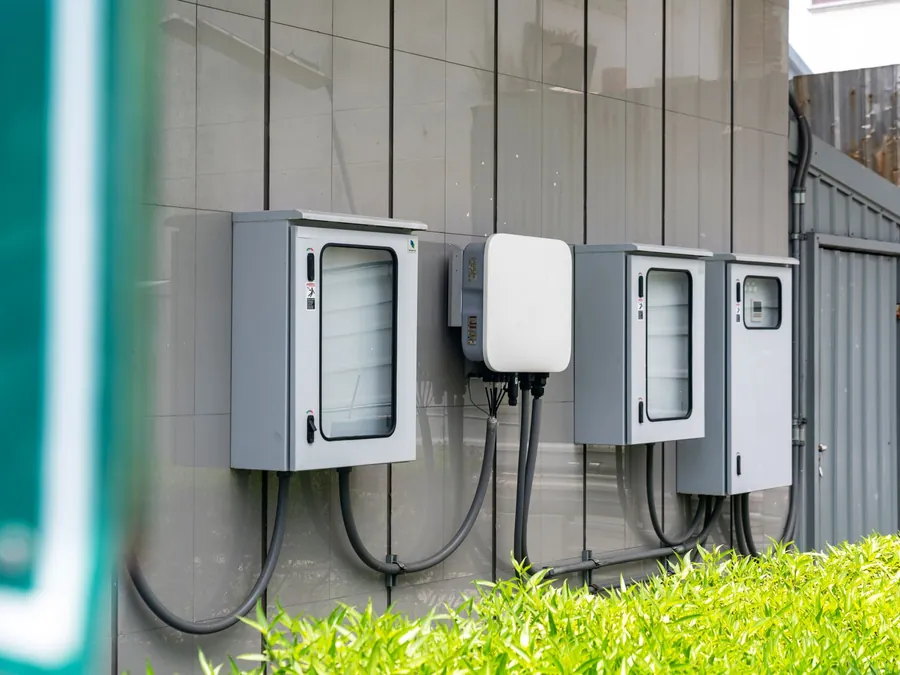
For sites that never close, storage earns its money on the weekday evening peak and on keeping demand under your agreed capacity as forklift and van charging grows. The Wythenshawe battery page explains how we size it.
Learn more about battery storage in Wythenshawe →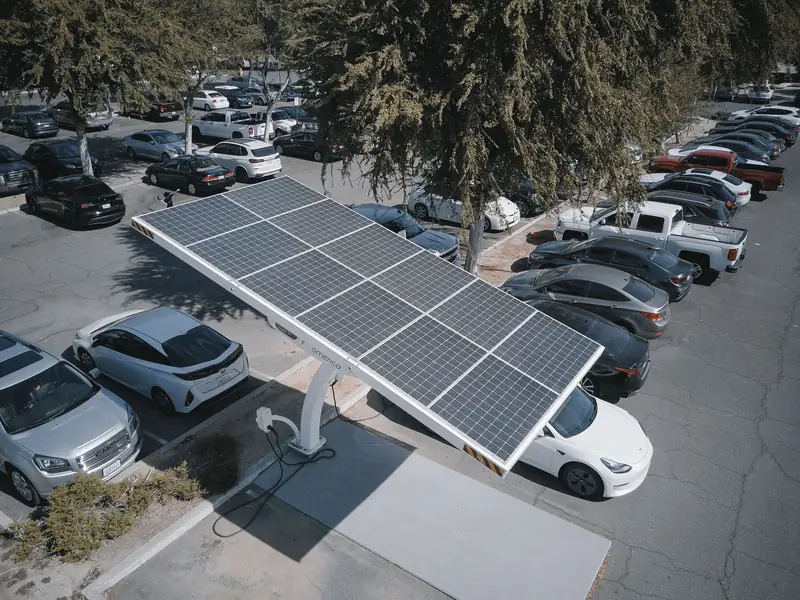
Staff and visitor car parks around Southmoor Road and Airport City are open, flat and unshaded. A canopy turns parking bays into generating space and gives a natural home for EV chargers, subject to prior approval on siting and glare.
Learn more about solar carports in Wythenshawe →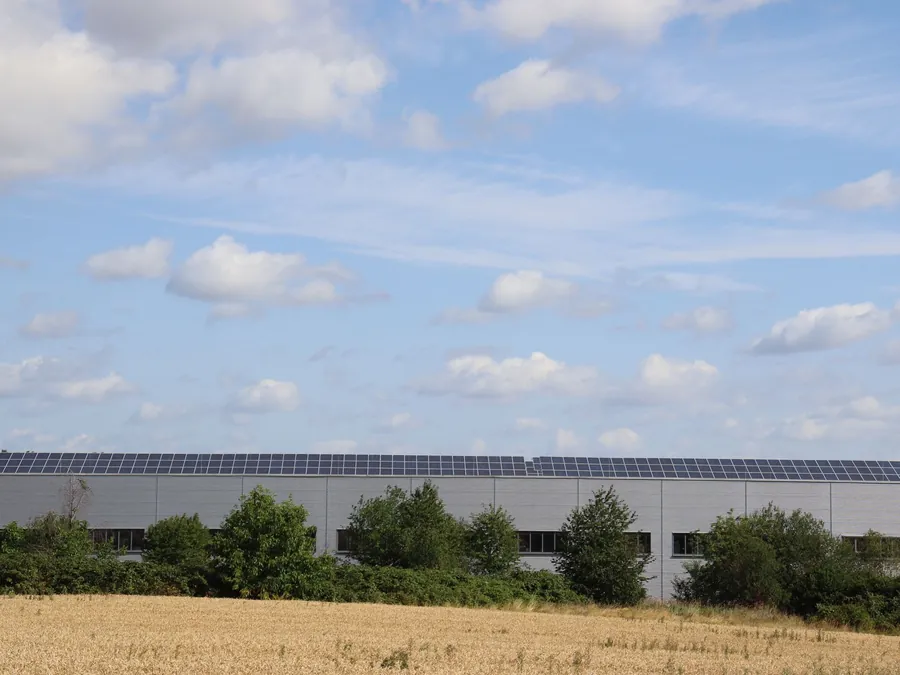
Large portal-frame roofs on Roundthorn and Sharston often suit low-tilt east-west layouts that fit more panels per square metre. We design them with the airport in mind and handle the G99 application with SP Electricity North West.
Learn more about commercial solar panels in Wythenshawe →Most units in the airport belt were built for logistics, and logistics rarely stops for the weekend. That changes the arithmetic in the owner's favour.
A five-day factory exports a lot of its Saturday and Sunday generation. A cargo or distribution site working seven days uses it, so nearly every kWh offsets a unit you would have bought. Given that suppliers serving mainly business customers need not offer an export tariff at all, that difference can decide whether a project pays.
Newer logistics sheds in the airport belt are typically portal frames clad in profiled metal. Those roofs still need a structural check and a fragility assessment around rooflights, but they do not carry the asbestos-cement sheeting found on many mid-century buildings, which takes a large and unpredictable cost out of the budget.
On a big, shallow roof, panels laid east and west at a low tilt sit closer together than a south-facing layout allows. PVGIS gives about 752 kWh per kWp a year for the east-facing half against roughly 900 for an ideal south pitch, but the extra panel count usually more than makes up for it, with flatter output across the day.
Arrays above 50 kW need prior approval from the council, and glare is one of the matters it considers. Close to an airport, we check early whether the airport's safeguarding team should be consulted, and we choose orientation and tilt with that in mind, so the planning submission arrives with the question already answered.
Chilled storage, air-conditioned offices and server rooms all work hardest in the warmer months, which is when a Wythenshawe roof produces most. In Greater Manchester, PVGIS estimates around 114 kWh per kWp in May against about 30 in December, a useful match for any site whose cooling plant is its biggest summer load.
Many airport-belt units are leased, often from large estate owners. Solar is still possible: either you fund it with your landlord's consent and agree what happens at lease end, or a third party funds and owns the array and sells you the power under an on-site PPA, which comes with its own contract terms to check.
"Most of the Wythenshawe sites we're asked about have a night-time demand that never drops much below the daytime figure, which means the roof is almost never generating more than the building can use."
There are two layers of cover on a commercial installation, and it pays to know which is which. The first is the installer's workmanship guarantee. It covers the way the system was put in: the fixings through your roof, the cable runs, the terminations, the protective devices and the commissioning settings. Its length and terms are written into the quotation, so you can read them before you sign rather than discover them afterwards.
The second layer belongs to the manufacturers. Panels normally carry a product warranty and a separate performance warranty, which promises a minimum output after a set number of years. Inverters and batteries have their own terms, often with cycle or throughput limits on storage. These vary by product, so every proposal names the exact models and attaches their warranty documents.
A guarantee is only as good as the install underneath it. That's why the structural check comes before the design is fixed, why every string is tested and recorded to BS 7671, and why the grid connection is commissioned to the settings SP Electricity North West has approved. If something we fitted fails because of how it was fitted, we come back and put it right.
In writing
Workmanship guarantee, set out in your quote
Per model
Manufacturer product and performance warranties
Test results, drawings, warranty certificates and the grid connection agreement are handed over in one pack on the last day.
We review a year of half-hourly readings to see the overnight base and weekend pattern, then survey the roof and car park. At the same stage we note how the site sits relative to the runways, so the glare question is in the file from day one.
We model east-west and south-facing options, compare the yield against your demand and show how much would be used on site. Where a glare assessment or safeguarding consultation looks likely, the proposal says so and builds in the time.
A structural engineer confirms the frame can take the load. For arrays above 50 kW we prepare the prior approval submission to Manchester City Council, and the G99 application goes to SP Electricity North West with a harmonic assessment where required.
On a site that runs all night, scaffold and hoists have to go where they will not block dock doors or HGV turning circles. We agree a work zone with your transport manager and keep pedestrian exclusion areas fenced off from the yard traffic on estate roads.
Mounting rails are fixed into the purlins, panels are laid out with maintenance walkways and fire access left clear, and inverters are placed where your team can see them without going on the roof. Cable routes avoid racking zones and sprinkler pipework inside the building.
Connecting the system to your main board needs a short isolation. For a site that never closes we plan that window with you, often overnight or during a scheduled maintenance slot, and complete the G99 and BS 7671 tests before the array is energised.
You get as-built drawings, test certificates, isolation procedures and monitoring access, plus information your insurer may want about the fire-safety measures recommended in RC62. If a glare study was produced for planning, a copy goes in the handover file too.
A timber-framed Tudor hall built around 1540, badly damaged by arson in 2016 and reopened to visitors in 2022 after a long repair programme.
Learn more about Wythenshawe Hall on Google Maps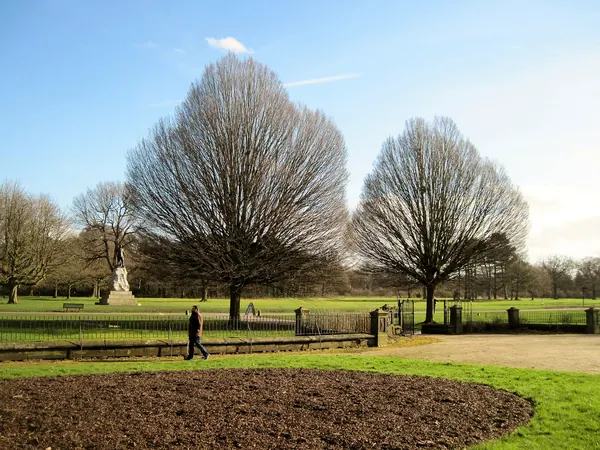
The big public park around the hall, with open parkland, woodland, a statue of Oliver Cromwell, a community farm and a horticulture centre.
Learn more about Wythenshawe Park on Google Maps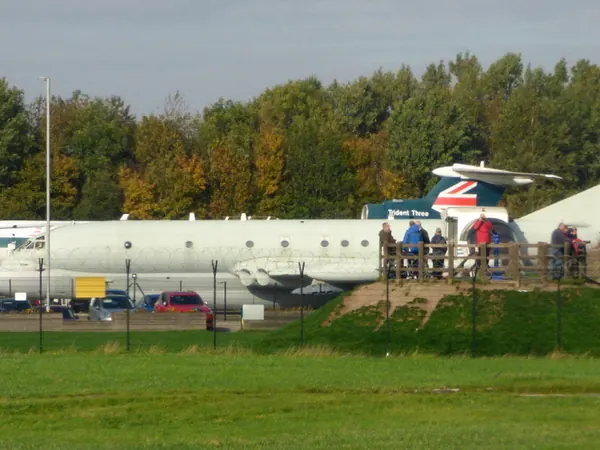
A viewing park on the edge of Manchester Airport where you can watch aircraft take off and land, and tour Concorde G-BOAC, on display here since 2004.
Learn more about Runway Visitor Park on Google MapsWe're a new name, so you won't find a wall of reviews here yet. We'd rather show you nothing than make some up.
For a project this size, reviews were never the best evidence anyway. Ask any installer you're considering for a reference site you can visit, a year or more of generation data from a system they fitted, and the grid connection paperwork from a past job. If they can't produce those, keep looking.
For 10 to 50 kW non-domestic systems in Great Britain, DESNZ records a mean installed price of £1,167 per kW in 2025/26, and per-kW prices usually keep falling as arrays get bigger. On airport-belt sites the variables are different from older parts of the city. Modern clad roofs often need less remedial work, but a glare study, safeguarding consultation or carport steelwork and groundworks can add cost. A site on HV metering may need different connection equipment, and a leased unit may need legal input on the roof licence.
Glare is a real design consideration this close to the runways, but it is usually manageable. Panel orientation, tilt and the type of glass all affect reflection. We check early whether the airport's safeguarding team needs to be consulted and, if a glare assessment is needed, we arrange it before the layout is fixed rather than after the planning submission.
Rooftop solar on a commercial building is normally permitted development under Class J, with conditions on distance from the roof edge and height above the roof. Arrays above 50 kW need prior approval from Manchester City Council covering design and glare, with a 56-day decision period. Solar carport canopies fall under Class OA, which needs prior approval on siting, design and glare, a maximum height of 4 m and at least 10 m from any house. Listed buildings are excluded. Northenden is the only conservation area nearby.
Yes, with your landlord's agreement. You can fund the system yourself and agree in writing who owns it and what happens at the end of the lease, or use an on-site power purchase agreement where a third party owns the panels and sells you the electricity. PPAs need careful reading on price, minimum take and what happens if the business changes hands.
Winter output in Greater Manchester is low, about a quarter of the summer peak per kWp. But a site that runs continuously uses every kWh the panels produce in any season, which is the main reason payback on a 24/7 operation tends to be quicker than on a five-day factory with the same roof.
Send your half-hourly data and a site plan. We'll come back with a layout that works for your demand, a view on glare and the airport, and the paperwork that will be needed.